
Are you searching for countries that allow you to get a job while studying in order to support your living expenses? Then you need to read this article to discover the best countries to study and work for international students.
Studying abroad can become a daunting experience for international students, as students coming from other countries may find it difficult to pay rent monthly, amidst other expenses like transportation to and from school.
Therefore, if you plan on studying abroad but don’t have a scholarship that can cover all of your expenses, you might need to consider getting a part-time or full-time job, and also find the best country to study and earn money.
Several countries make it possible for international students to work in their country to help them pay for academic expenses during their studies. However, if you need to find the best country to study and work abroad, you can see through our compiled list and pick the best country for international students to study and work in 2026.
20 Best Study-Work Countries for International Students 2026
-
USA
-
Canada
-
United Kingdom
-
Germany
-
Australia
-
Switzerland
-
France
-
Spain
-
New Zealand
-
Ireland
-
Italy
-
Netherlands
-
Singapore
-
Sweden
-
Poland
-
Denmark
-
Czech Republic
-
New Zealand
-
South Korea
-
Austria
Related: 12 Best Countries to Study Abroad
Table Showing 20 Best Work-Study Countries for International Students and Their Living Costs
|
S/N |
Country |
Living Cost |
|
1. |
USA |
$1,000 - $1,500 per month |
|
2. |
Canada |
$1,320 per month |
|
3. |
United Kingdom |
£1,334 per month |
|
4. |
Germany |
€850 per month |
|
5. |
Australia |
AUD1,870 per month |
|
6. |
Switzerland |
€1,300 - €1,700 per month |
|
7. |
France |
€1,000 - €1,200 per month |
|
8. |
Spain |
€900 - €1,100 per month |
|
9. |
New Zealand |
NZD1,250 per month |
|
10. |
Ireland |
€1,240 - €1880 per month |
|
11. |
Italy |
€700 - €1,000 per month |
|
12. |
Netherlands |
€800 - €1,200 per month |
|
13. |
Singapore |
S$1000 - S$2,500 per month |
|
14. |
Sweden |
8,000 to 14,000 SEK per month |
|
15. |
Poland |
€350–€800 per month |
|
16. |
Denmark |
DKK 6,000-9,000 per month |
|
17. |
Czech Republic |
€500–€800 per month |
|
18. |
New Zealand |
NZ$1,250 - $2,500 per month |
|
19. |
South Korea |
?950,000 to ?1,850,000 per month |
|
20. |
Austria |
€950–€1,200 per month |
20 Best Countries for International Students to Study and Work 2025
Most of these countries that allow you to work while studying abroad usually have some eligibility criteria. In most cases, you will need to submit some paperwork to the proper authorities to get permission to work while studying.
There are 20 countries that will make it easy for international students to study and work.
1. USA

First on our list of the best countries to study and work 2026 is the United States of America. USA which is a home to Ivy League schools and a large number of top universities in the world, is a dream destination for millions of students across the globe. In the USA, international students can work for up 20 hours per week during school sessions (on-campus or authorized off-campus like CPT/OPT) and full-time (40 hours/week) during official breaks (summer, winter).
Cost of Living: $1,000 - $1,500 per month
Top courses to study in USA
-
Engineering
-
Computer Science
-
Business and Management courses
-
Pharmacy
-
Data Science
On-Campus Employment Rules (F-1 Visa)
- Hours: Up to 20 hours/week during semesters, full-time during breaks.
- Location: On campus or at an "educationally affiliated off-campus location" (e.g., research labs).
- Eligibility: Must maintain valid F-1 status; no special USCIS application needed, but your school's DSO handles authorization on your I-20.
Off-Campus Employment (Requires Authorization)
- Curricular Practical Training (CPT):
- Internships/co-ops directly related to your major, integral to your curriculum.
- Your Designated School Official (DSO) authorizes it on your I-20.
- Full-time CPT for 12 months or more makes you ineligible for OPT.
- Optional Practical Training (OPT):
- Must have completed at least 9 months of study and maintain F-1 status.
- Can be used before or after graduation.
- Requires USCIS approval and an Employment Authorization Document (EAD).
Studying and Working in USA
International students seeking to study and work in USA will need an F-1 visa, which is the one given to international students who will study a full-time program.
The F-1 visa grants the right to work on campus for a maximum of 20 hours per week during the study period and up to 40 hours per week during the vacation period. Working on campus means that the job must be done for the institution you are studying at, and it can be done inside or outside the institution.
Read: 20 Cheapest Universities in the USA for International Students
2. Canada

Canada is a great country that offers lots of benefits to international students in terms of education. Aside from being amongst the best countries for students to study and work, international students also have the benefit of staying back to work full time after completion of their studies. Students are allowed to work off campus up to 24 hours per week without a work permit. Make sure you meet the other requirements for working while you study.
Cost of Living: $1,320 per month
Top courses to Study in Canada
-
Journalism
-
MBA
-
Medicine
-
Technology
-
Agriculture
Eligibility & Rules
- Your permit must state you can work.
- Full-time student in a program at least 6 months long at a DLI.
- You can only start working after your study program begins.
- Up to 24 hours/week during terms, full-time during breaks (summer/winter).
- Healthcare/childcare roles might need permit amendment/medical exam.
Studying and Working in Canada
International students in Canada with a study permit who are enrolled full-time in a Designated Learning Institution (DLI), can work off campus for 20 hours per week without a work permit. All working students need a Social Insurance Number (SIN) and must verify specific conditions on their study permit, with potential restrictions for healthcare/childcare roles. A work permit isn't needed for these roles, but is for co-op placements or after graduation (PGWP).
This means you can work for any employer in any occupation anywhere in Canada. International students can also work on campus if they wish.
3. United Kingdom

Aside from being known for having impressive high-quality universities, historical landmarks, and multicultural communities, the United Kingdom is also known as one of the countries that allows international students to work while studying.
Cost of Living: £1,334 per month
Top courses to study in the United Kingdom
-
Medicine
-
Law
-
Business and Management
-
Engineering
-
Natural Science
Work Rules for International Students in the United Kingdom
-
International students on a Student visa can work up to 20 hours per week during term time
-
Students can work full-time during official school holidays
-
Work must not interfere with academic studies or attendance
-
Allowed jobs include part-time roles in retail, hospitality, offices, and on-campus positions
-
Students must not be self-employed or run a business
-
Students must not work as professional sportspersons or entertainers
-
Full-time permanent employment is not allowed while studying
-
A valid National Insurance Number is required before starting work
-
Students must check their visa or BRP for exact work conditions
-
Employers must be informed of the student’s work-hour restrictions
Studying and Working in the UK
International students can work and study in the UK if they have a Tier 4 student visa. This is the visa that is given to international students who are studying in the UK for six months or longer.
You will be allowed to work for a maximum of 20 hours per week, depending on your course of study. On vacation days, all students with a work permit are allowed to work full-time for up to 40 hours per week.
4. Germany

If you are looking for the best Schengen country to study and work, Germany should be on your top search list. This great country with history attracts students from different parts of the world with its standard education, and low tuition fees, and also provides international students the stay back option to explore job opportunities after graduation.
Cost of Living: €850 per month
Top Courses to Study in Germany
-
Medicine and Dentistry
-
Business and Economics
-
Law
-
Engineering
-
Computer Science
-
Natural Sciences
-
Architecture
Rules
-
International students in Germany can work 120 full days or 240 half days per year
-
A half day usually means working up to 4 hours per day
-
Students can also work as student assistants (Hiwi) at universities for up to 20 hours per week during the semester
-
Full-time work is allowed during semester breaks, as long as the yearly limit is not exceeded
-
Students must not be self-employed or work as freelancers
-
A valid residence permit must allow employment
-
Students need a tax ID and must register with the tax office before starting work
-
Earnings above a certain limit require paying tax and social security contributions
-
Internships that are part of the study program may follow different rules
Studying and Working in Germany
Students from EU/EEA countries are allowed to work for up to 20 hours per week during the semester.
Students outside of EU member states are only allowed to work 240 half days or 120 full days per year, either in term or during vacations.
If you find work as a student assistant, then the 120-day rule does not apply to you. This is because there are no limitations to jobs at the university. However, you will have to inform the foreigners’ registration office if you want to work more hours.
Read: Schengen Visa Application: Requirements, Application Form
5. Australia

Long renowned for having a wide range of study programs to choose from, Australia is a country good for study and work, and is also coming out as an attractive destination for international students.
Cost of Living: AUD 1,870 per month
Top courses to study in Australia
-
Accounting
-
Engineering
-
Agricultural Sciences
-
Computer Science & Information Technology
Rules
-
International students on a Student visa can work up to 48 hours per fortnight during study periods
-
Students can work unlimited hours during official school holidays
-
Work must not interfere with study requirements or class attendance
-
Students can work in part-time or casual roles such as retail, hospitality, and campus jobs
-
Self-employment and running a business are not allowed
-
Students must have a valid Tax File Number (TFN) before starting work
-
Employers must follow Australian workplace laws and pay at least the minimum wage
-
Work conditions are listed on the student visa grant notice
-
Voluntary or unpaid work must still follow visa work limits
Studying and Working in Australia
The Australian immigration system allows students visiting the country on a student visa the chance to work up to 20 hours per week during term time, and during vacations students can work full-time.
In order to work in Australia, international students need to get a Tax File Number (TFN). Students who want to work during their studies in Australia should first visit the Australian Taxation Office to get their TFN. They will need to provide their name, current address, and date of birth. They may also need to supply their date of arrival in Australia, passport, and proof of enrollment.
6. Switzerland

Education in Switzerland might be expensive for international students because Switzerland has a high-quality life, making it a no brainer for international students to choose the study-work option.
If you are searching for the best country for study and part time job, you should consider this EU country.
Cost of Living: €1,300 - €1,700 per month
Top courses to study in Switzerland
-
Management Courses
-
Marketing Courses
-
Banking and Finance
-
MBA
-
Engineering
Rules
-
International students can start working after living in Switzerland for at least 6 months
-
Students can work up to 15 hours per week during the academic term
-
Full-time work is allowed during official semester breaks
-
The job must not interfere with studies or class attendance
-
Employers must apply for a work permit on behalf of the student
-
Students must have a valid residence permit that allows employment
-
Self-employment and freelance work are not allowed
-
Students must pay tax and social security contributions on their earnings
-
Wages and working conditions must follow Swiss labour laws
Studying and Working in Switzerland
International students can work a maximum of 15 hours per week during their studies, and up to 100 per cent during semester breaks. This must be reported in all cases to the responsible immigration authorities.
However, students from outside the EU/EFTA region may only start working six months after the beginning of their studies.
7. France

France is an attractive country for international students, in terms of its enriching culture of art, fashion, and architecture, combined with the innovative academic programs, and is also part of the best European countries to study and work.
Cost of Living: €1,000 - €1,200 per month
Top courses to study in France
-
Art History
-
Geography
-
Linguistics
-
Sociology
-
Pharmacology
-
European and Mediterranean Cultures
-
Communication technology
Studying and Working in France
All foreign students have the right to work both on Campus and Off-Campus, while studying in France. This right applies to all students in France. Students who are not European Union nationals must have a student resident permit.
French law allows foreign students to work up to 964 hours per year, or the equivalent of 60% of the maximum working hours permitted.
Rules
-
International students in France can work up to 964 hours per year, which equals about 20 hours per week
-
Students can work part time during the academic year and full time during holidays within the yearly limit
-
Work must not affect studies or class attendance
-
Students must have a valid student residence permit that allows employment
-
Employers must declare the student’s employment to the French authorities
-
Self-employment and freelance work are not allowed on a student status
-
Students must pay tax and social security contributions if earnings exceed the legal threshold
-
A Social Security number is required before starting work
8. Spain

Spain is another one of the best European countries for study and work among international students. Spanish universities, which are highly recognized, also have a plethora of study options for students at home and abroad.
Cost of Living: €900 - €1,100 per month
Top courses to study in Spain
-
Arts and Humanities
-
Law
-
Marketing and Finance courses
-
Business and Management courses
-
Natural Science
-
Hospitality Management
-
Computer Science and Information Technology
Studying and Working in Spain
Requirements to work in Spain for EU/EEA students are the same as for Spanish students. Nationals of EU/EEA member countries are free to work in Spain without work permits or any other restrictions. All that is needed is a signed work contract between the student and employer.
However, requirements to work in Spain for non-EU/EEA students include:
-
Engage in part-time work (20 hours per week / 4 hours per day).
-
Obtain a work permit (the employer should make the application).
-
Have another main means of financial support (the part-time work income should only be complementary).
-
Find a balance between studies and work (do not let work interfere with your studies in Spain).
9. New Zealand

New Zealand is a favorite among countries you can work and study. The universities in New Zealand provide quality education, and are known for producing top professionals in various fields as well.
Cost of Living: NZD 1,250 per month
Top courses to study in New Zealand
-
Nursing
-
Engineering
-
Medicine
-
Hospitality
-
IT and Computer Science
-
Business management
Studying and Working in New Zealand
International students can work while studying as long as they have working rights on a student visa. You can work a maximum for 20 hours a week if you are studying in a full-time academic program for at least two years.
If you need to gain more work experience during your study program, you may also receive permission to work for more hours a week.
Rules
-
International students in New Zealand can work up to 20 hours per week during the academic term
-
Students can work full time during scheduled holidays
-
Work must not interfere with study requirements or attendance
-
Students must hold a valid student visa that allows employment
-
A valid IRD number is required before starting work
-
Allowed jobs include part-time or casual roles such as retail, hospitality, and campus work
10. Ireland

Ireland is quickly becoming one of the top study abroad destinations in the world, in terms of quality education, and being one of the best place to study and work abroad.
Cost of Living: €1,240 - €1880 per month
Top courses to study in Ireland
-
Natural sciences
-
Technology
-
Economics
-
Humanities
Studying and Working in Ireland
International students engaged in full-time study of at least one year’s duration (on a course leading to a qualification which is recognized by the Irish Department of Education and Skills currently do not need a work permit to work in Ireland.
Students holding a valid immigration stamp 2 permission will be permitted to work 20 hours per week
11. Italy

Italy is the fifth most populated country in Europe and has 34 internationally ranked universities. This EU country is known for its lovely weather and rich food, and is also one of the best countries to study and work abroad for international students.
Cost of Living: €700 - €1,000 per month
Top courses to study in Italy
-
Study Design
-
Arts
-
Business and Finance
-
Management courses
-
Hospitality and Tourism
-
Social Science and Humanities
Studying and Working in Italy
International students who are EU nationals have the right to work in Italy alongside their studies but should not exceed 20 hours a week of work during regular study periods. However, you may take on more hours during vacation periods.
Non-EU students may work during their studies if they obtain a work permit, which requires a job offer from an Italian-based employer.
12. Netherlands
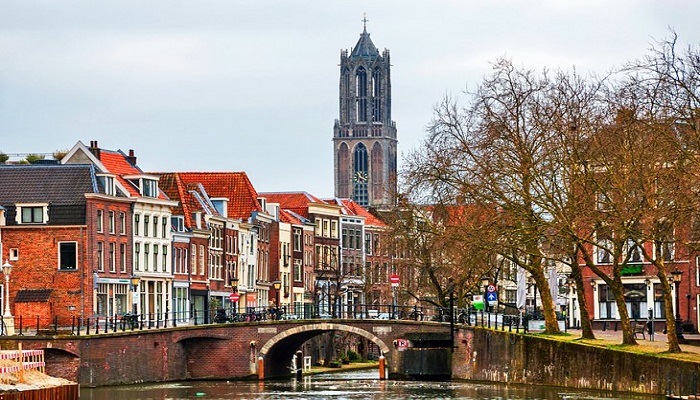
Situated in Europe, alongside prominent countries such as Germany and Belgium, the Netherlands has become one of the most sought-after destinations for international students who search for the best country to study and get a job.
Cost of Living: €800 - €1,200 per month
Top courses to study in the Netherlands
-
Management courses
-
Business courses
-
Engineering
-
Natural Science
-
Information Technology
Studying and Working in the Netherlands
Whether you will need a work permit to work while studying in the Netherlands depends on your nationality. Non EU international students need a work permit in order to have a part-time job to work 16 hours in the Netherlands.
However, If you are a citizen of the EU/EEA or Switzerland, you do not need a work permit, and there is no restriction on the number of hours you are allowed to work.
13. Singapore

Aside for being known for its top-ranking universities, and student-friendly climate, Singapore is also the ideal higher education destination for international students searching for the best country for work and study.
Cost of Living: S$1000 - S$2,500 per month
Top courses to study in Singapore
-
Biomedical Engineering
-
Pure Engineering
-
MBA
-
Banking and Finance
-
Computer Science
Studying and Working in Singapore
International students are allowed to work for a maximum of 16 hours a week while attending a college or university in Singapore. You must have a Work Pass Exemption and all other requirements to make work and study in Singapore possible.
14. Sweden
Studying in Sweden offers world-class education, numerous English-taught programs, and opportunities to work during studies. Sweden has been one of the European pioneers for switching to English-language tuition and offers a whopping 900 degrees to choose from.
Cost of Living: S$1000 - S$2,500 per month
Top courses to study in Sweden
Computer Science
Engineering
Environmental Science
Life Sciences (Biomedicine, Biotech)
Business/Management
Studying and Working in Sweden
Studying and working in Sweden as a non-EU/EEA student involves getting a residence permit for studies, allowing limited work (often part-time), and then potentially extending it for a job search after graduating by securing 30+ credits and an employment contract.
15. Poland
Studying in Poland offers affordable, high-quality education with many English-taught programs in fields like medicine, engineering, and business. The country offers world-class education at modest tuition fees and remarkably affordable cost of living. It is modern, clean, and safe, and offers all of the social and cultural opportunities available elsewhere, but at a cost of living still much lower than in Western Europe.
Cost of Living: €350–€800 per month
Top courses to study in Poland
Law
Arts and Humanities
Engineering
IT & Computer Science
Medicine & Healthcare
Studying and Working in Poland
Students can generally work up to 20 hours per week during the academic year and 40 hours during breaks if you are a full-time student with a student visa or residence permit.
16. Denmark
Denmark boasts an advanced educational system with many world-class institutions. At some 30 higher education institutions, you can find well over 500 English-taught study programmes to choose from.
Cost of Living: DKK 6,000-9,000 per month
Top courses to study in Denmark
Engineering
Business & Management
Supply Chain Digitalisation
Studying and Working in Denmark
Up to 90 hours/month during the term (Sept-May) and full-time in June, July, August, with opportunities for a 3-year job-seeking permit after graduating from higher education to find work in Denmark's high-quality.
17. Czech Republic
Czech Republic boasts not only rich history, beautiful architecture and low cost of living, but also a long tradition of high-quality education. Study programmes conducted in the Czech language at public universities are free of charge, but studies in foreign languages are subject to tuition fees.
Cost of Living: €500–€800 per month
Top courses to study in the Czech Republic
Medicine & Healthcare
Engineering
Humanities and Social Sciences
Information technology
Studying and Working in the Czech Republic
Non-EU students in full-time, accredited programs don't need a work permit but must prioritize studies, often working limited hours (around 20 hours/week recommended), though technically full-time is possible if studies aren't affected.
18. New Zealand
Study in a high-quality education system closely monitored and regulated by the New Zealand government. Experience practical teaching style and hands-on learning to inculcate real-world skills that will open doors of global opportunities.
Cost of Living: NZ$1,250 - $2,500 per month
Top courses to study in New Zealand
Business Administration
Construction Management
Health and Nursing
Agriculture/Environmental Science
Studying and Working in New Zealand
International students on a student visa can generally work up to 25 hours per week during term time (increased from 20 hours as of late 2025), plus full-time during scheduled breaks.
19. South Korea
Studying and working in South Korea involves strict rules, primarily for international students (D-2/D-4 visas): you need prior immigration permission for part-time work, limited to around 20-30 hours/week during semesters.
Cost of Living: ?950,000 to ?1,850,000 per month
Top courses to study in South Korea
Computer Science and Information Technology
Engineering and Technology
Korean Language and Cultural Studies
Health and Medical Sciences
Business and Management
Studying and Working in South Korea
Typically 20-30 hours/week during semesters, with no limits on weekends/holidays (though some sources vary, check official sites).
20. Austria
Studying in Austria offers high-quality, affordable education with many English-taught programs, low tuition fees at public universities (especially for EU/EEA students), and a rich cultural environment.
Cost of Living: €950–€1,200 per month
Top courses to study in Austria
Engineering
Computer Science
Business
Natural Sciences
Humanities/Social Sciences
Studying and Working in Austria
In Austria, international students (non-EU/EEA) can work up to 20 hours/week during term with an employer-applied work permit, while full-time work is allowed during breaks, but studies must remain the priority.
Conclusion
Even as you find the best country to earn money while studying, from the countries listed in this article, you also need to know that some of these countries are countries that allow international students to work after graduation. All you may need to do is apply for work permit to stay longer and work in the country upon completion of your studies.